
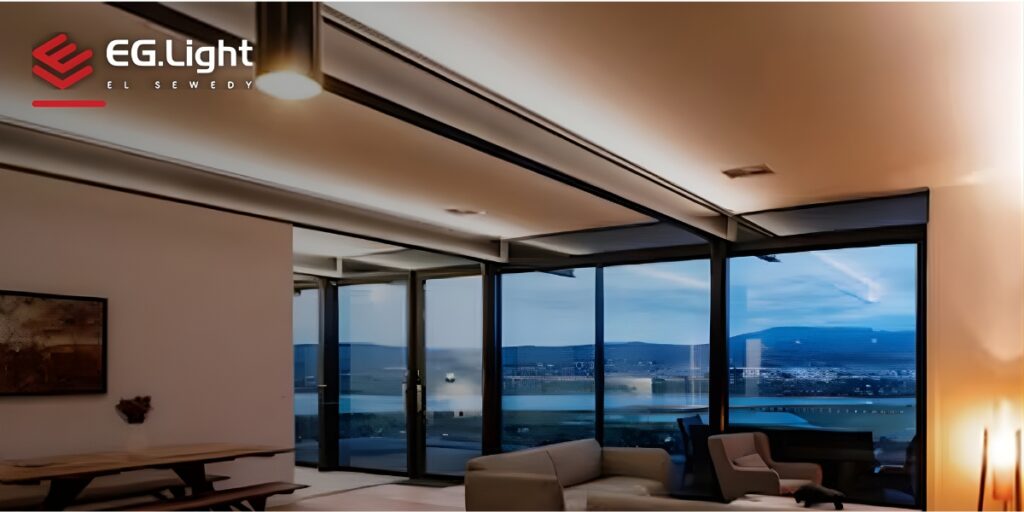
A guide to choosing the right office lighting. Increase productivity starts here
“lighting” is often neglected when planning work offices, and is satisfied with a random light source. But, did you know that lighting is the invisible engine of focus and creativity? Inappropriate lighting not only causes headaches and eye strain, but also directly leads to lower productivity rates and lower employee efficiency.
Here’s a practical guide to choosing lighting that turns your office into a stimulating environment for success:
- 1. Understanding “Color Temperature” (Color Temperature)
This is the most important element in controlling the work mood. Color temperature is measured in Kelvin (K):
- Cold lighting (4000K – 5000K): It is the ideal choice for offices. They mimic daylight, aid alertness, concentration and brain activation.
- Warm lighting (less than 3000K): Although comfortable, it may cause lethargy in the work environment, so it is preferable to use it only in reception halls or rest areas.
2. Balanced distribution (avoid dazzle and shadows)
The biggest mistake in offices is having too bright areas next to dark areas. This sharp contrast is eye-straining.
Technical tip: Adopt a “diffuse lighting” system (Diffuse Lighting) that distributes light evenly throughout the space, reducing the appearance of annoying shadows on screens or countertops.
Avoid glare (Glare Control): Make sure lighting is not reflected directly onto computer screens, as this can be distracting and strain eyesight.
3. Maximizing the use of natural light
There is no substitute for sunlight. Window-based offices significantly increase job satisfaction levels.
Strategy: Place work desks near windows but not directly facing them to prevent dazzle. Use light curtains to control light intensity during peak times.
4. Task Lighting (Task Lighting)
Don’t rely on ceiling light alone. Adding “office lampshades” or focused lighting in individual work areas gives the employee greater control over his or her own environment. This allows him to adjust the light intensity depending on the type of task he is doing (reading documents, using a computer, or writing).
5. Color Rendering Index (CRI)
In offices that require high visual accuracy (such as design, engineering, or auditing offices), attention must be paid to the color rendering coefficient (CRI). Choose lighting units with a CRI coefficient of 80 or higher, to ensure that colors and lines are seen with extreme accuracy without distortion.

